Poisoning and death of Constance Bonacieux
The Three MusketeersThe poisoning and death of Constance Bonacieux is the fatal reversal that converts the long rescue quest into irreversible loss. With the cardinal's Guards approaching and d'Artagnan among the horsemen, Milady gives Constance a poisoned drink under the guise of restoring her strength; when d'Artagnan reaches her, Constance can offer only a last kiss before dying in his arms. The event destroys the lovers' hoped-for reunion, exposes the final cruelty of Milady's vengeance, and leaves the four friends confronting a death that ordinary courage could no longer prevent.
Causes and Immediate Crisis
Constance is discovered in a condition that makes escape impossible. As the approaching riders draw near, Milady recognizes d'Artagnan in the first horseman and identifies the danger as the uniform of the cardinal's Guards. The arrival is not merely a rescue party but the closing movement of the pursuit: the carriage rushes away at a gallop, and three or four shots are fired as the Musketeers approach. Milady therefore faces capture while Constance, already physically exhausted, cannot keep pace with her.
Milady tries to force a flight through the garden, holding the key and insisting that only minutes remain. Constance manages two steps before collapsing to her knees. Milady attempts to raise and carry her, but cannot do so. Constance explicitly urges Milady to flee alone, yet Milady refuses to leave her behind. The apparent refusal creates the event's cruel ambiguity: for a moment, Milady seems to choose companionship or protection, but the scene quickly turns that gesture into an instrument of revenge.
The Poisoning
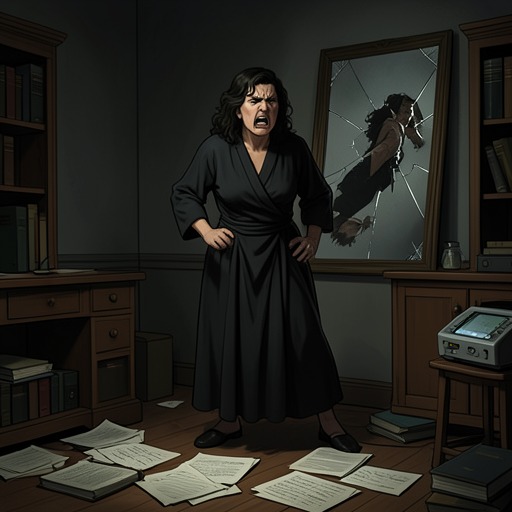
Milady suddenly stops, and a livid flash passes through her eyes. She runs to the table, opens a ring with remarkable speed, and empties its contents into Constance's glass. The substance is a reddish grain that dissolves immediately. The ring functions as a concealed weapon, and the speed of the act shows that the poison is prepared and available rather than discovered by chance.
Milady then disguises the murder as assistance. Taking the glass in a steady hand, she tells Constance that the wine will give her strength and puts it to the young woman's lips. Constance drinks mechanically, too weakened to understand or resist what is being done. Milady replaces the glass with an infernal smile and admits that this was not the revenge she had intended, but that one must do what one can. Her words make the value reversal explicit: the threatened victim who had seemed to impede her escape becomes the object of a final act of vengeance, while Milady gains a momentary freedom at the cost of Constance's life.
Milady immediately rushes from the room. Constance remains behind in a dreamlike paralysis, unable to follow. The delay between the drink and the arrival of the rescuers intensifies the tragedy: the sound of gates, boots, spurs, and voices raises the expectation that help has come, but the poison has already made rescue too late.
Recognition and Death
Constance suddenly recognizes d'Artagnan's voice and runs toward the door, calling his name. D'Artagnan answers and searches for her, transforming the pursuit's expected climax into a scene of recognition. She knows that he has arrived; he knows that she is alive and near. Yet the recognition produces no recovery, because the poison has already begun its irreversible work.
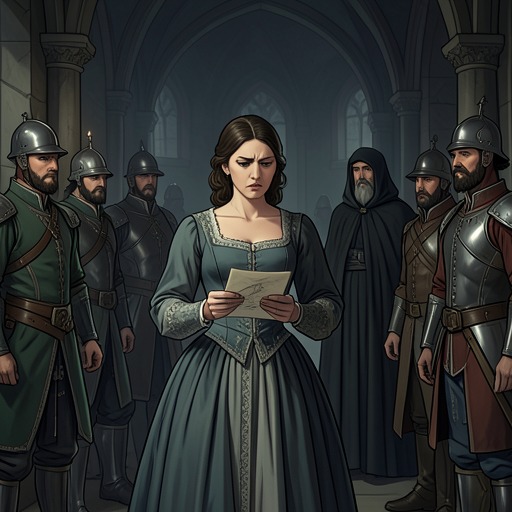
Constance identifies Milady as the Comtesse de Winter. The name shocks the four friends, and Athos's cry dominates the others because he recognizes the woman through his own earlier history with Milady. The revelation joins Constance's fate to the wider chain of deception, marriage, revenge, and persecution surrounding Milady. It also confirms that the apparent companion who stayed with Constance was the very enemy the Musketeers had been pursuing.
Constance calls repeatedly for d'Artagnan and begs him not to leave her, declaring that she is dying. He releases Athos's hands and hastens to her. Her face is distorted by agony, her eyes have become glassy and sightless, convulsions shake her body, and sweat runs from her brow. The physical signs make the hidden act legible at last: the glass that promised strength has delivered death.
Gathering her remaining strength, Constance takes d'Artagnan's head in her hands and looks at him as though her whole soul passes through the glance. She presses her lips to his in a final kiss. A sigh escapes her mouth and lingers for an instant on d'Artagnan's lips; then he is holding only a corpse. He cries out and collapses beside her, pale and icy like the woman he has lost. The four companions respond according to their distinct emotional and religious registers: Porthos weeps, Aramis points toward heaven, and Athos makes the sign of the cross.
Consequences and Aftermath
The death is both a personal catastrophe and a decisive plot consequence. D'Artagnan's mission has reached its apparent object—he has found Constance—but the reunion arrives only at the threshold of death. The rescue pattern is therefore reversed: the pursuing force reaches the captive, yet cannot save her, and the beloved's voice becomes the last summons before silence. The event changes d'Artagnan's relation to the pursuit from hope of recovery to grief and vengeance.
Constance's identification of Milady supplies the surviving witnesses with an immediate link between the poisoning and the fugitive enemy. The four friends do not encounter an anonymous death; they encounter the consequence of Milady's presence, her concealed poison, and her declared desire for revenge. The scene thus prepares the movement from rescue to judgment, in which the question is no longer how to recover Constance but how Milady is to be pursued and punished.
The aftermath also gathers the novel's central contrasts into one chamber: love is present in the final kiss, friendship in the companions' shared response, religious symbolism in Aramis's gesture and Athos's sign of the cross, and vengeance in the poisoner's retreat. Constance's death is not an incidental casualty of the chase. It is the point at which political persecution, private hatred, disguise, and romantic devotion converge, leaving d'Artagnan with the knowledge that courage and speed can defeat danger only when they arrive before the hidden act has taken effect.